
Challenge
NPS in-person training was cut by government reductions and mandates, though serious safety issues were present and training/compliance mandates were unchanged. Scoping of the Collateral Duty Safety Coordinator pathway (a role limited to only 8 hrs/pay period to safety) showed it could take years for CDSCs to acquire skills/knowledge to address safety issues.
My Role
Leadership at the Facilities Workforce Career Academy (Historic Preservation Training Center) requested innovative new strategy for training and applying skills-based training. HPTC has a long history of working with coalitions/partnerships for skill-based training.
Context: Collateral duty safety coordinators (detailed at just 8 hours/pay period) had little training or time to acquire skills in safety inspections and compliance.
Action(s)
I attended the IMTech 2024 immersive learning event and established contact with the Shenandoah Center for Immersive Learning (SCiL), setup a SCiL tour for HPTC training managers, and introduced SCiL resources to support the HPTC curriculum in safety and water/wastewater treatment. Outlined a strategy to implement immersive tech in HPTC trainings and supported with change management (demos, walk-throughs, communications).
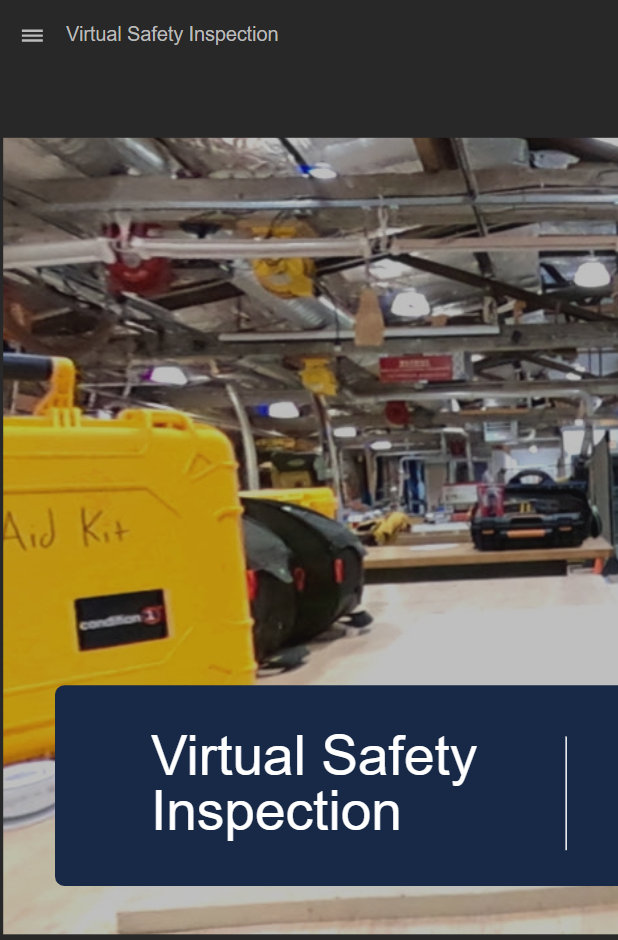
Applied previous knowledge of working with VR developers and current Storyline 360-image capabilities to scope/prototype a Virtual Safety Inspection of an HPTC Carpentry Shop. Collaborated with chief safety officer at Jenkins Training Center to stage and record “jenky” images of compliance for the training set in four areas of the facility; learners were guided to learn more, answer questions, or make decisions using resources in context. Handled all aspects of project from collaboration and planning, to graphics and development.
Result(s)
The Virtual Safety Inspection provided the means for skills-based training in realistic contexts that could be delivered on laptops and tablets (which were currently being pilot-tested for some regions). For the first time, safety officers were exposed in early training to spot and mitigate hazards in the workshop, without needing to spend days in training. Resources built for the training could be carried over on the job and the course could be referenced at any time for reinforcement.
Project Link(s):