
Challenge
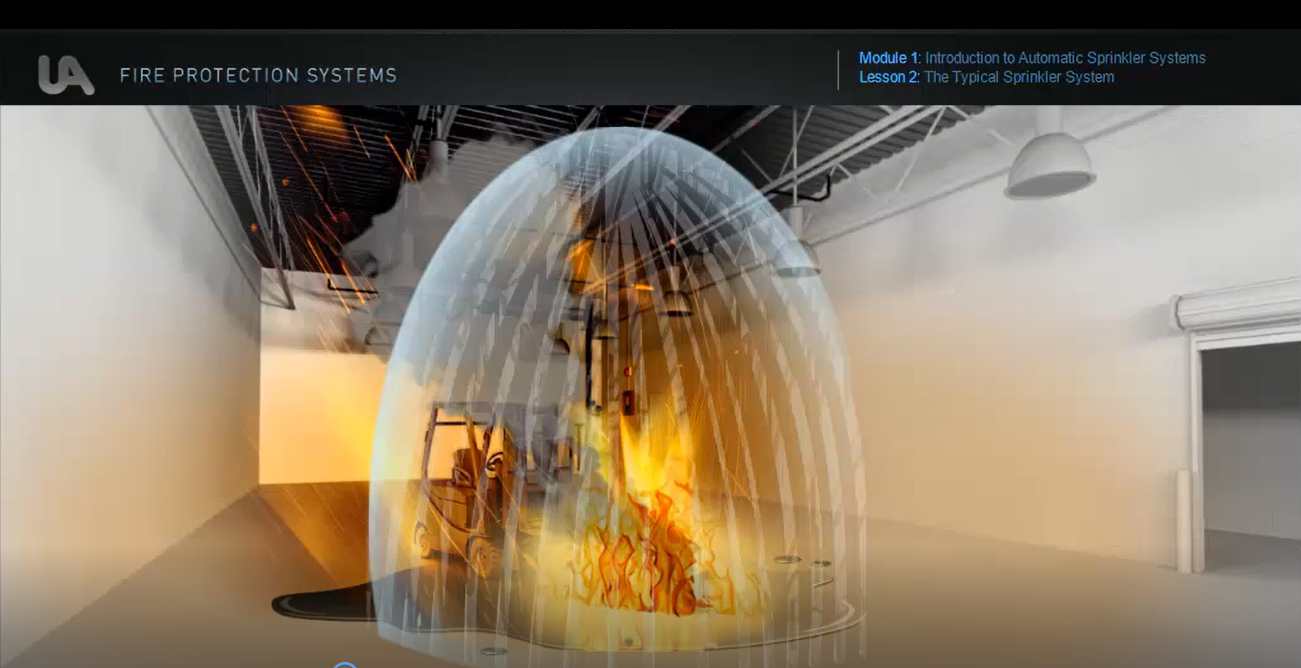
The United Association (UA) approached Mosaic Learning with a challenge to design and build training that would provide deep technical knowledge of complex fire suppression systems, including functionality, components, and compliance with industry standards. UA wanted to explore possibilities with immersive learning, including augmented and virtual reality to enable learning in context.
My Role
As Senior Instructional Designer with Mosaic Learning, I was added to the development team midway through development as requirements and scope were becoming unclear. I acted as Project Lead with a cadre of technical subject matter experts, e-learning developer, and quality assurance analyst as well as liaison to the multimedia and design teams building this 3D exploration of fire suppression systems.
Action(s)
This interactive solution included a series of e-learning modules to provide foundational information, capped by a “3D explorer” experience that let learners learn virtually “in context” of a typical system: they could explore a simulated system, examine or interact with components through 360-degree views, and learn more about functionality and specs through tips and videos.
I reverse-engineered objectives for the training, updated and documented the design plan, and visually mapped the design onto an interactive board, enabling feedback and alignment of SME requirements for designers/developers. I managed extensive coordination and documentation between various SMEs and the multimedia/VR team to ensure accuracy of technical renderings and functionality. I directed artists/designers; used Captivate, Audacity and Photoshop to develop the e-learning modules; wrote assessments; and managed quality assurance for all aspects of the project.
Result(s)
The SMEs were immediately receptive to having an organized, visual display of this complex training (in RealTImeBoard/Miro) that helped everyone work from the same vision throughout the project. With someone on the inside to ensure technical accuracy, work progressed more quickly on the delayed project and teams were able to rally around wins at defined developmental stages.
Project Link(s): View Project Overview